
If you’re searching for effective cat lifespan tips, this guide will show you how to help your cat live longer and healthier.
Introduction
If you’re looking for practical cat lifespan tips, this guide will help you understand how to keep your cat healthy and living longer.
When you bring a kitten into your home, there is something important you need to think about from the very beginning.
It is not just food or toys.
It is about long-term health and lifespan.
In my experience living with cats in Japan, two decisions have the biggest impact:
- Finding a trusted veterinarian
- Spaying or neutering your cat
These topics may feel uncomfortable at first, but they are essential for your cat’s well-being.
Start With a Trusted Veterinarian
The first step after adopting a kitten is to find a reliable veterinarian.
A veterinarian will help with:
- Vaccinations
- Health checks
- Advice on daily care
- Spaying or neutering procedures
Having a regular clinic makes it easier to respond quickly if your cat becomes sick.
Why Spaying and Neutering Matters
At first glance, these procedures may seem harsh.
However, for indoor cats, they are often necessary.
1. Reducing Stress and Aggression
Cats with strong sexual instincts may become:
- More aggressive
- Easily stressed
- Restless indoors
For indoor cats, this stress can negatively affect their lifespan.
2. Preventing Problem Behaviors
During mating seasons, cats may:
- Spray urine inside the house
- Cry loudly
- Try to escape
This can be difficult for both the cat and the owner.
3. Preventing Uncontrolled Breeding
If mating occurs, the number of cats can increase rapidly.
Raising multiple kittens requires:
- Time
- Money
- Space
Preventing this situation is part of responsible ownership.
4. Health and Lifespan Impact
Pregnancy and repeated births can put a physical burden on female cats.
In general, proper medical care and controlled living conditions contribute to longer lifespans.
Indoor vs Outdoor Cats: A Big Difference
From commonly shared data:
- Indoor cats can live close to 20 years
- Stray cats may live around 2 years
This shows how much environment affects lifespan.
When I was a child, it was common to hear that a 7-year-old cat was “old.”
Today, that is no longer the case.
Cost vs Responsibility
Spaying and neutering require an initial cost.
However, not doing it can lead to:
- Multiple kittens
- Higher long-term costs
- Increased responsibility
From my perspective, it is better to manage one cat properly than to struggle with many.
(Professional breeders are a different case.)
Timing and Cost (Japan Reference)
Here is a general guide:
| Procedure | Timing | Cost (JPY) |
|---|---|---|
| Male (Neutering) | Around 6–12 months | 16,000 – 30,000 yen |
| Female (Neutering) | Around 6–8 months | 5,000 – 30,000 yen |
Prices vary depending on the clinic. Always check with your veterinarian.
Global Cost Overview (General Trends)
Costs vary by country, but typical ranges are:
- United States: about $100 – $500
- Europe: about €50 – €300
- Asia (including Japan): generally lower, depending on region
These are general estimates.
Always confirm with a local veterinary clinic.
Real-Life Perspective
When I first started living with cats, I did not fully understand these responsibilities.
But over time, I realized that small decisions early on can affect a cat’s entire life.
Spaying and neutering are not just medical procedures.
They are part of creating a stable and low-stress life.
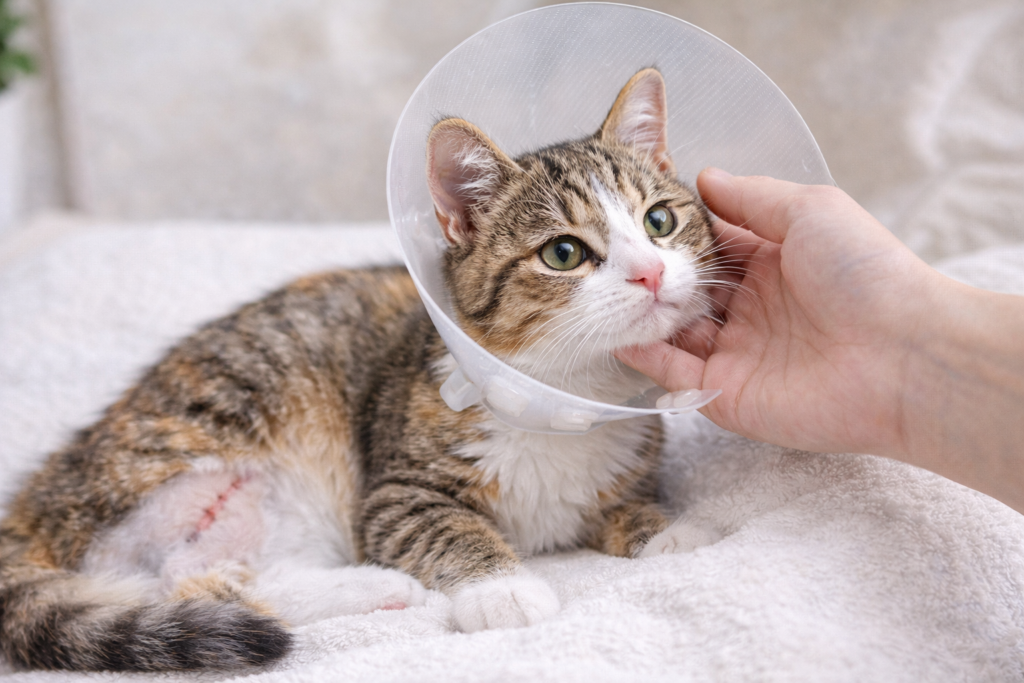
As a side note, after neutering surgery, my cats had to wear an Elizabethan collar for a few days to prevent them from licking their wounds. Since I have multiple cats, I had to be especially careful because they sometimes groom each other.
To help reduce stress, I played with them using simple manual toys like a feather wand. One time, when one of them jumped to catch the toy, the collar got caught in a groove in the wooden floor. For a brief moment, he ended up almost upside down.
I felt sorry for him, of course—but at the same time, it was surprisingly funny. Even now, I still regret not being able to capture that moment in a photo or video.
Conclusion
To help your cat live longer:
- Choose a good veterinarian early
- Consider spaying or neutering at the right time
- Provide a stable indoor environment
These actions may not seem dramatic, but they have a lasting impact.
Related Articles
For more practical cat care tips:
FAQ
Q1. Is neutering necessary for indoor cats?
In many cases, yes. It helps reduce stress and behavioral problems.
Q2. Does it really affect lifespan?
A stable indoor life with proper care is linked to longer lifespans.
Q3. Is the procedure expensive?
Costs vary, but it is often more manageable than raising unexpected kittens.
Disclaimer
This article is based on personal experience and general information.
It is not a substitute for professional veterinary advice.
For medical decisions, please consult a licensed veterinarian.