Among the most popular cats in Japan, one breed stands out for its size and appearance:
👉 Norwegian Forest Cat
With its thick coat and strong build, it offers a very different presence compared to smaller or short-haired cats.
What Is a Norwegian Forest Cat?
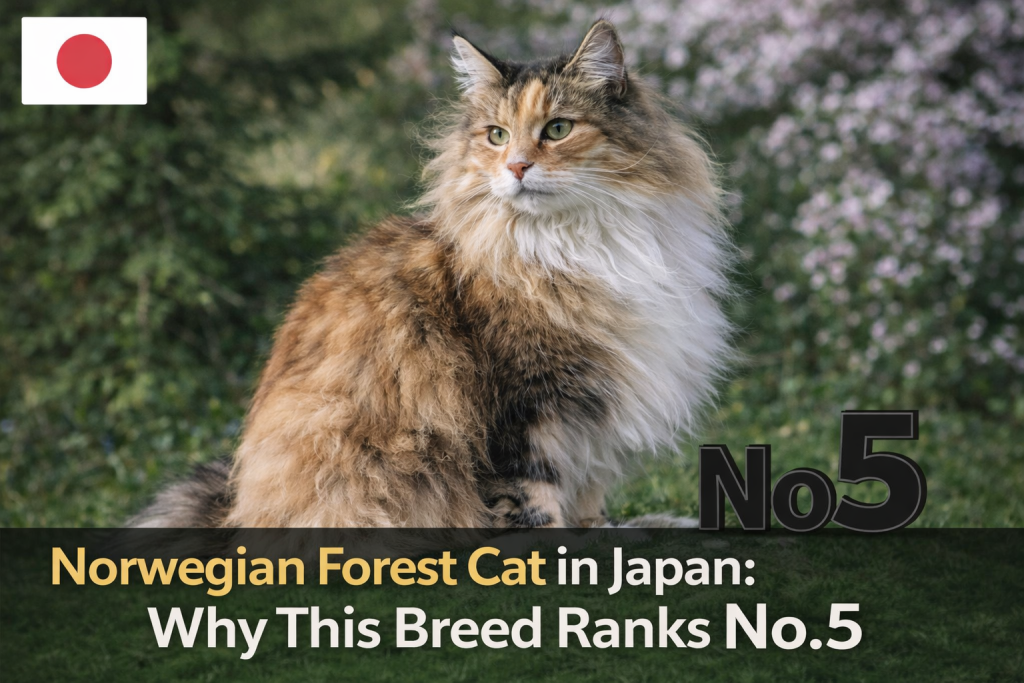
The Norwegian Forest Cat is a large, long-haired breed known for:
- a thick double coat
- strong, muscular body
- bushy tail
- triangular face
It originated in Northern Europe, where it adapted to cold climates.
Origin and Background
This breed developed naturally in Norway over time.
Its physical features reflect survival in harsh environments:
- dense fur for insulation
- water-resistant outer coat
- strong legs for climbing
Why It Is Popular in Japan
Despite being a large breed, it has gained popularity in Japan for several reasons:
- impressive and elegant appearance
- calm and stable personality
- contrast with smaller popular breeds
For many cat owners, it represents something different from typical indoor cats.
Coat Structure and Characteristics
One of the most defining features is its coat.
Double Coat Structure
- outer coat: long, slightly oily, water-resistant
- undercoat: soft and insulating
This structure helps protect the cat in cold climates.
Coat Length and Texture
- medium to long fur
- thicker around the neck (mane-like appearance)
- very full tail
The coat changes slightly depending on the season.
Coat Colors and Patterns
Norwegian Forest Cats come in a wide variety of colors.
Common Colors
- white
- black
- blue (gray)
- red (orange)
- cream
Common Patterns
- tabby (very common)
- solid
- bicolor
- tortoiseshell
- calico
Notable Points
- tabby patterns are especially common
- coat combinations vary widely
- appearance can differ significantly between individuals
Personality and Behavior
Norwegian Forest Cats are often described as:
- calm
- observant
- independent
They are generally not overly demanding but still form strong bonds with their owners.
Activity Level
They are moderately active:
- enjoy climbing
- like elevated spaces
- not as hyperactive as some smaller breeds
Providing vertical space (such as cat trees) can be beneficial.
Living With a Norwegian Forest Cat in Japan
In Japan, where indoor living is common:
- space may be limited
- climate varies by season
This breed can adapt, but there are a few considerations:
- their size requires enough space
- their coat may need attention during warmer months
- airflow and temperature control can help maintain comfort
Grooming and Care
Because of their coat:
- regular brushing is recommended
- shedding can increase seasonally
- mats can form if not maintained
Compared to short-haired cats, care requirements are higher.
Is This Breed a Good Choice?
It may be a good fit for:
- people who like large cats
- those who appreciate long-haired breeds
- owners who can manage grooming
However, space and care should be considered.
How It Compares to Other Cats in Japan
Compared to:
- American Shorthair (No.4)
👉 larger and requires more grooming
Compared to:
- Munchkin (No.3)
👉 less active but physically larger
Compared to:
- Mixed-Breed Cats (No.1)
👉 more predictable in size and coat type
Related Articles
FAQ
Why are Norwegian Forest Cats popular in Japan?
Their large size and long coat create a strong visual appeal compared to smaller breeds.
Do they require a lot of grooming?
Yes. Their long coat requires regular brushing, especially during shedding seasons.
Are they suitable for apartments?
They can adapt, but space and vertical movement opportunities are important.
Final Thoughts
The Norwegian Forest Cat represents a different category of appeal in Japan:
👉 large
👉 long-haired
👉 calm
It stands apart from more compact or short-haired breeds,
offering a unique presence in indoor living environments.