
If your cat is not eating, it can be a sign of stress, illness, or food preference issues.
Common Reasons Why Cats Stop Eating
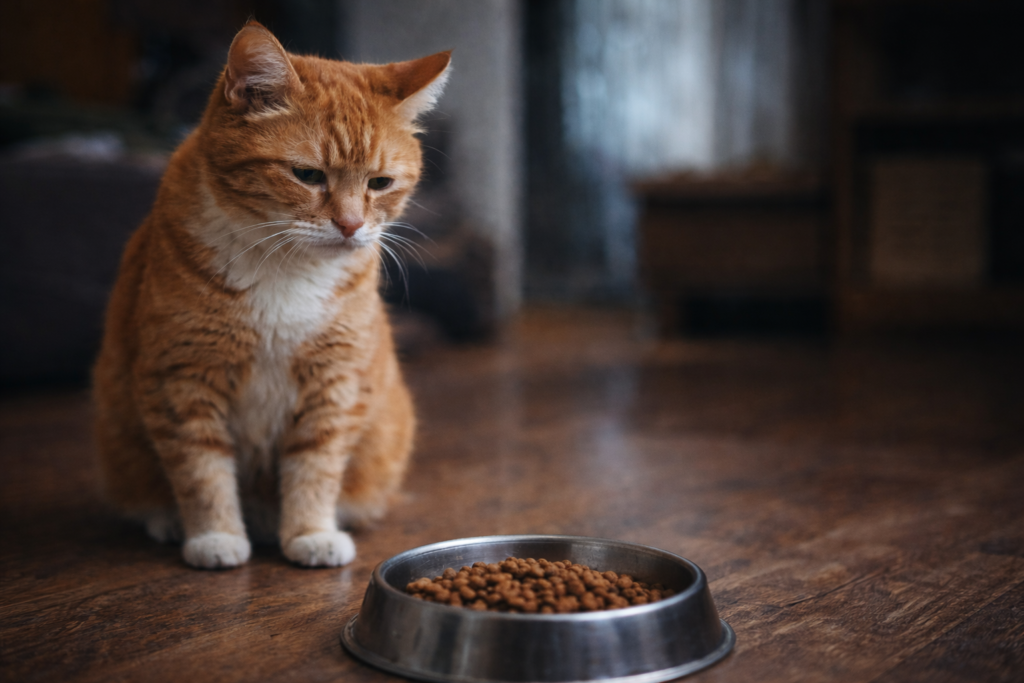
There are several reasons why a cat may suddenly stop eating. Some are harmless, while others require immediate attention. Understanding the cause is the first step to solving the problem.
If you are preparing for your kitten,
you can also check recommended items here:
Best Cat Water Fountains for Kittens (2026 Guide)
How Often Should You Feed a Kitten? (Complete Guide 2026)
Has your cat suddenly stopped eating?
Have you noticed your cat walking away from their food?
Did something change…
or did nothing change at all?
It can feel a little worrying.
But sometimes, the reason is quieter than we expect.
Could your cat be bored with the same food?
Have you been feeding the same food every day?
In some cases, cats may simply… get tired of it.
Even if it is a good product,
even if it is nutritious—
the taste does not change.
And over time,
interest may fade.
What can you try?
If you are looking for safe options,
you can check these guides:
Best Cat Water Fountains for Kittens (2026 Guide)
How Often Should You Feed a Kitten? (Complete Guide 2026)
Best Automatic Feeders for Kittens (2026 Guide)
Could a small change make a difference?
Some owners in Japan try simple adjustments:
- Adding a small topping, such as dried bonito flakes
- Using a light sprinkle (furikake-style cat toppings)
- Slightly warming the food to enhance aroma
Just a small variation—
not a complete change.
Is changing food a good idea?
What if your cat still doesn’t eat?
Switching food can help.
But it should be done carefully.
Change gradually
If you change food too quickly,
your cat’s stomach may become upset.
Instead, try:
- Mixing the old and new food
- Starting with a small amount of the new food
- Increasing slowly over several days
A gentle transition often works better.
What about “high-quality” food?
Is more expensive food always better?
Sometimes, premium cat food focuses on health.
Which is important.
But… have you ever thought about balance?
If we compare it to human life—
Even if something is healthy,
would you want to eat only that every single day?
Sometimes, people crave something different.
Something richer.
Something comforting.
Cats may not think the same way as humans—
but preference still exists.
When to Worry: Warning Signs to Watch
If your cat refuses food for more than 24–48 hours, it may indicate a health issue. Watch for signs like lethargy, vomiting, or weight loss.
Could your cat feel unwell?
Is your cat eating less… or not at all?
Cats groom themselves frequently.
Because of that,
they may vomit from time to time.
If your cat is nauseous
If your cat seems to feel unwell:
- Avoid forcing food
- Let them rest
- Observe quietly
If the condition continues,
it may be better to consult a veterinarian.
What can you offer instead?
If solid food feels difficult,
could something softer help?
In Japan, many owners use:
- Moist, paste-like foods
- High-water-content treats
These may be easier to take in
when appetite is low.
When should you be concerned?
How long has your cat stopped eating?
If your cat refuses food for an extended period,
or shows signs of discomfort—
it may be time to seek professional advice.
How to Get Your Cat Eating Again
Try offering fresh food, warming meals slightly, or switching textures. Creating a calm feeding environment can also help improve appetite.
If your cat is not eating,
the environment and food choice matter.
You may want to explore beginner-friendly options such as:
Final thoughts
Why is your cat not eating?
Is it boredom…
a small discomfort…
or something more?
In many cases, the answer is not loud.
A slight change.
A quiet signal.
Something easy to miss.
Sometimes, all it takes
is a small adjustment—
and a little attention.
This article is for informational purposes and reflects commonly observed cat care practices. If symptoms persist, please consult a veterinarian.