
If your cat is peeing on the bed, it can be frustrating. Understanding the cause is the first step to fixing the problem.
Cat peeing on the bed can be frustrating, but understanding the cause is the first step to fixing it.
Why Is My Cat Peeing on the Bed?
If your cat suddenly starts peeing on the bed, it can feel confusing and stressful.
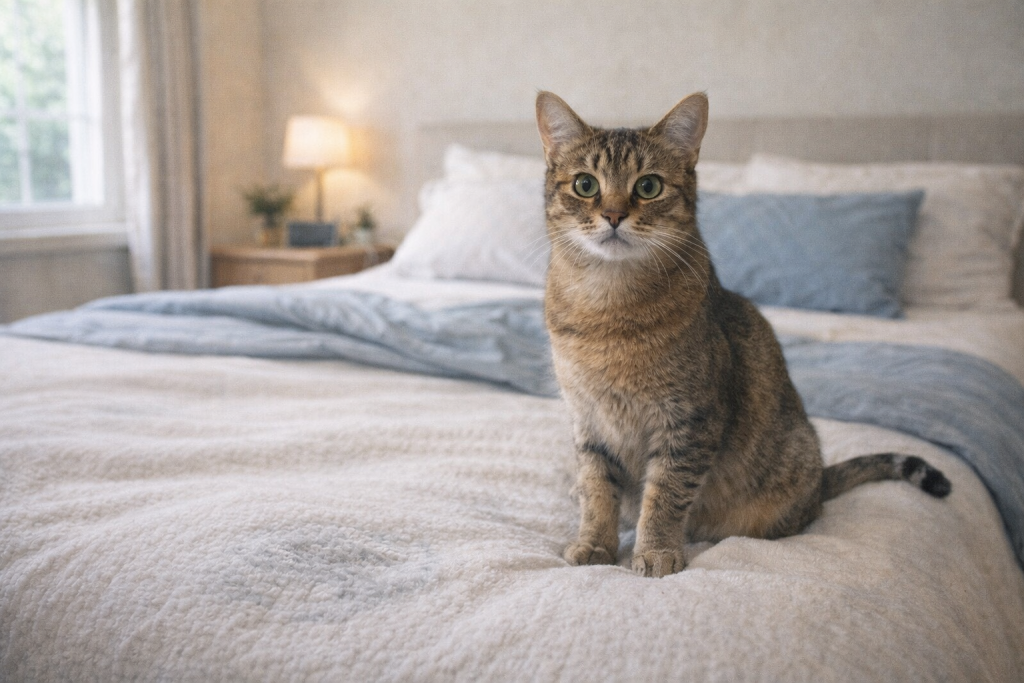
👉 This is one of the most common problems cat owners face
In this guide, you will learn:
- real causes
- what actually works
- what I experienced in Japan
Why Do Cats Pee on the Bed?
One common issue is cat peeing on bed due to stress or environmental changes.
There is no single reason.
However, most cases fall into a few categories.
1. Stress or Emotional Changes
Cats are sensitive to small changes.
Examples include:
- changes in daily routine
- less interaction
- new environments
👉 Even small stress can lead to behavioral changes.
2. Litter Box Problems
A common reason is dissatisfaction with the litter setup.
- dirty litter box
- wrong location
- type of litter
👉 Cats may avoid using it altogether.
3. Scent and Texture
Beds can attract cats because:
- they contain the owner’s scent
- they are soft and absorbent
👉 This combination can confuse some cats.
4. Medical Issues (Always Consider)
Sudden changes may also be linked to:
- urinary problems
- discomfort
- health conditions
👉 This should always be kept in mind.
My Real Experience (From Japan)
To stop cat peeing on bed, it’s important to identify the root cause first.
How to Stop a Cat from Peeing on the Bed
In my home, one of my cats suddenly started peeing on bedding.
- age: around 5–6 years
- already fully trained
- only one of two cats
👉 It always happened on futons.
What Made It Difficult
The biggest issue was not just the behavior.
👉 It was the impact on daily life.
I kept asking myself:
- How will I sleep tonight?
- Should I replace the bedding?
- How do I stop this?
What I Tried (And What Didn’t Work)
❌ Things That Didn’t Work Well
- odor sprays
- disinfectant products
- washing repeatedly
👉 The ammonia smell remained.
Eventually, I had to replace multiple sets of bedding.
What Actually Helped
Instead of strict training, I made small changes.
✔ Practical Steps
- cleaned the litter box more often
- changed its location
- improved daily interaction
✔ Most Important Change
👉 spending more time with the cat
- playing regularly
- giving attention
- reducing possible stress
Over time, the behavior stopped.
What Might Have Caused It
I cannot be certain.
But based on the situation:
- stress was likely a factor
- litter setup may not have been ideal
- lack of stimulation may have contributed
👉 It was not a training issue.
How to Stop a Cat from Peeing on the Bed
Here is a simple approach:
✔ Step 1: Check the Litter Box
- clean daily
- try different locations
- adjust litter type
✔ Step 2: Increase Interaction
- play regularly
- reduce boredom
- maintain routine
✔ Step 3: Limit Access (Temporary)
- keep bedroom closed
- remove attractants
✔ Step 4: Observe Patterns
- time of day
- location
- triggers
👉 small clues can help identify the cause.
Cat peeing on bed is frustrating, but it can often be fixed with the right approach.
Related Articles
If you’re improving your cat’s environment, these may help:
- How to Extend Your Cat’s Lifespan
- Cat Nail Care: Real Experience from Japan
- Do Indoor Cats Need Baths?
- How to Train a Kitten to Use a Litter Box
FAQ
Why would a trained cat start peeing on the bed?
Stress, environment changes, or litter box dissatisfaction are common reasons.
Will punishment stop this behavior?
No. It may increase stress and make the problem worse.
How long does it take to fix?
It depends on the cause. Some cases improve quickly, others take time.
Common Reasons Cats Pee on Beds
There are several reasons why a cat may start peeing on the bed. One common cause is stress or anxiety, especially if there has been a change in the home environment.
Medical issues such as urinary tract infections can also lead to inappropriate urination. If the behavior suddenly starts, it is important to consider a health check.
Another reason could be litter box problems, such as a dirty box or an uncomfortable location.
Final Thoughts
This problem can feel overwhelming.
But in many cases, it is not random.
👉 It is a response to something in the environment.
Small adjustments — especially attention and routine — can make a real difference.